E-invoicing in Germany: who must, from when
By Philipp Kant 3 min read
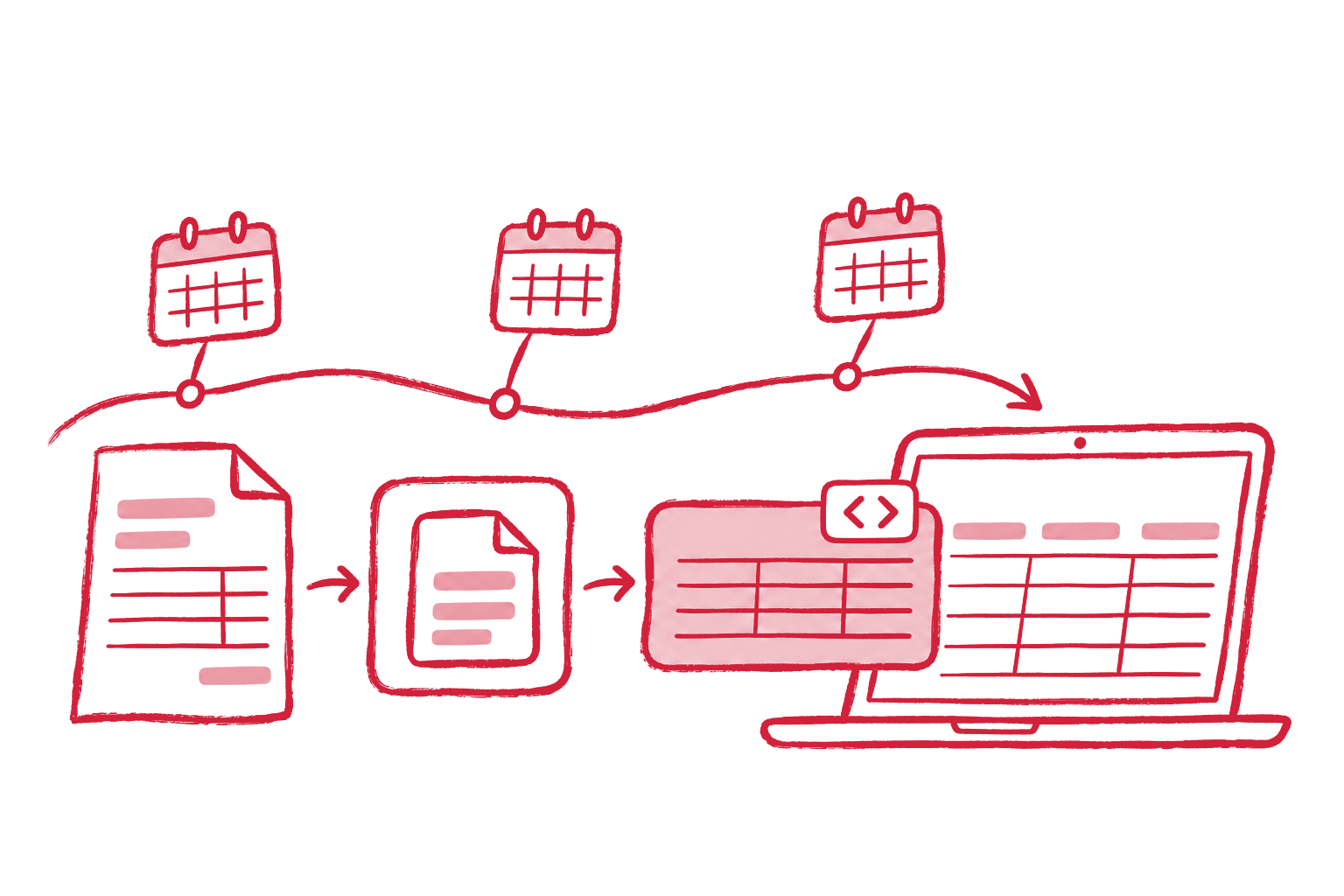
An e-invoice is an invoice in a structured electronic format that software can read without retyping, such as XRechnung or ZUGFeRD. Since 2025, Germany has been phasing in a mandate for invoices between businesses: everyone must receive them, and after a transition period ending in 2027, everyone must issue them.
As of November 9, 2026, based on the transitional rules in the German VAT Act and the explanations of the chambers of commerce (IHK). This article is not tax advice.
The deadlines at a glance
| From | What applies |
|---|---|
| January 1, 2025 | Every business must be able to receive and process e-invoices |
| 2025 and 2026 | Paper and PDF invoices may still be issued, PDF with the recipient’s consent |
| January 1, 2027 | Issuing e-invoices is mandatory above €800,000 prior-year turnover |
| 2027 | Up to €800,000 prior-year turnover, other invoices are still allowed |
| January 1, 2028 | Issuing e-invoices is mandatory for every business |
What counts is total turnover in the previous calendar year. The mandate covers transactions between domestic businesses.
What counts as an e-invoice
| Format | E-invoice? |
|---|---|
| XRechnung (XML) | Yes |
| ZUGFeRD from version 2.0.1, a PDF with embedded XML data | Yes, in the profiles that carry all mandatory details as data |
| PDF without structured data | No, an “other invoice” |
| Paper invoice | No |
| Scanned invoice, photo | No |
The difference from a PDF: an e-invoice carries supplier, invoice number, line items, amounts, and tax as data. Accounting software reads it directly, without text recognition and without retyping.
Who is exempt
- Invoices to consumers: the mandate applies only between businesses.
- Small-amount invoices: invoices up to €250 gross.
- Travel tickets: such as rail and flight tickets that count as invoices.
- Small businesses (Kleinunternehmer): they need not issue e-invoices, but must be able to receive them like everyone else.
What it means for small companies
You must already be able to receive. In practice that means a mailbox suppliers can send e-invoices to, and software that can display and book them. The common invoicing and accounting programs handle that; sevDesk writes e-invoices even on its free plan, see Lexware Office vs sevDesk.
You must issue them from 2027 if your 2026 turnover exceeded €800,000, otherwise from 2028. Switching now pays off earlier: structured invoices move faster through the customer’s accounting and get paid faster.
E-invoices make automation easy
Because an e-invoice brings its data along, a program can check and book it without text recognition: identify the supplier, match the purchase order, suggest a cost center, route it for approval. For the PDF invoices that keep arriving until the end of 2027, an AI agent reads the data from the document. How that works is in invoice processing automation; how an agent types an invoice into an inventory system without an interface is shown in the live demo on our home page.
For business process automation with AI, we deliver invoice intake as a fixed workflow at a fixed price. Which other processes pay off is shown by the free AI potential check.
FAQ
When does the e-invoicing mandate apply? Every business must receive since January 1, 2025. Issuing is mandatory from January 1, 2027 above €800,000 prior-year turnover, from January 1, 2028 for every business.
Is a PDF invoice an e-invoice? No. A PDF without embedded structured data is an “other invoice”. ZUGFeRD is a PDF with embedded XML data and counts as an e-invoice.
Do small businesses have to issue e-invoices? Businesses under the Kleinunternehmer rule are exempt from issuing. They must still be able to receive e-invoices.
Does the mandate apply to invoices to consumers? No. It applies only to invoices between domestic businesses.
Ask an AI about this post
